
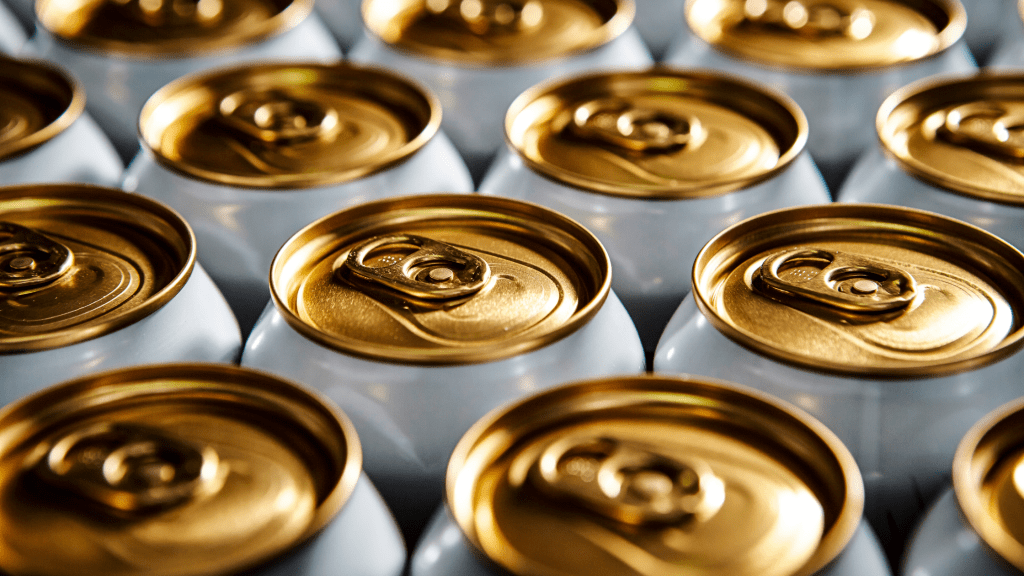
Big cans filled with big beers are taking over cooler space everywhere from concerts and sporting events to your local grocery or convenience store. The popularity of 19.2-ounce cans is only growing nationally, and it just makes a lot of sense.
Here in southern New England, you’ll find a mix of 19.2-ounce cans, also called stovepipes, from New Belgium Voodoo Ranger and Dogfish Head 60-Minute IPA to Wormtown Be Hoppy and Lawson’s Finest Liquids Sip of Sunshine. Generally, these tall, skinny cans are filled with IPAs clocking in around 6–9% ABV or higher. You might find some lighter options at events, but breweries say stronger beers remain in demand for this format.
When Oskar Blues first released 19.2-ounce cans in 2012, it meant craft beer drinkers were no longer stuck between 12-ounce cans or bottles or 22-ounce bombers. Of course, 16-ounce cans have since taken the spotlight, but these slightly larger cans fit nicely into existing canning lines with little to no extra effort.
“The advantage to 19.2-ounce cans versus something like a 24-ounce can is they are the same diameter as a 12-ounce or 16-ounce can,” said Matt Przygoda, brand manager at Harpoon Brewery. “We were able to fit 19.2s on our canning line by just changing some parts instead of having to invest in a new canning line or contract brewing elsewhere.”

While these larger cans are filled with more golden liquid, they’re also packed with opportunities for consumers and breweries. Jack’s Abby Craft Lagers started canning their House Lager and Banner City Light Lager in response to consumers tired of doing the awkward aisle shuffle.
“[Canning] started with venue requests actually – especially the TD Garden,” said Rob Day, VP of Marketing at Jack’s Abby. “People at concerts and sporting events want to minimize the trips to concessions, so the larger format helps offer the right value and convenience.”
Similarly, these larger cans are simply more portable. Say you’re headed to a cookout and you don’t trust your host’s beer IQ. You can swing by the liquor store or gas station, pick up a pair of stovepipes, and be on your way. You’ve got enough beer for the afternoon and don’t have to lug around a four- or six-pack of cans.

Larger cans also mean more real estate for a brewery’s branding. People are more likely to see what you’re drinking, whether it’s at an event or in the backyard among friends.
This increased brand recognition extends to the retail space, where a can might catch your eye and, since it’s just one, might be more enticing to grab and toss it in your basket.
“Convenience stores are a growing category for single-serve and could offer an opportunity to introduce these beers to more people,” said Day. “Grocery is getting really smart about how to use it and I’ve seen some classic liquor stores add impulse placements, which I think is really smart, too.”
A reliable grab-and-go option for nearly any occasion, the stovepipe is surely here to stay for quite some time. But what’s next? There’s always a new “new,” so will it be expanded 19.2-ounce offerings of lower ABV beers? More imperial IPAs? Or maybe an even more convenient size altogether?
“It will be interesting to see if the pendulum swings the other way in package size and we see smaller cans enter the market, given the increased focus on moderation,” said Harpoon’s Przygoda. “I’d love to see some 8 oz craft cans out there!”
One can only hope for an 8-ounce can revolution on the horizon!

 Bearded & Brewed
Leave a comment